

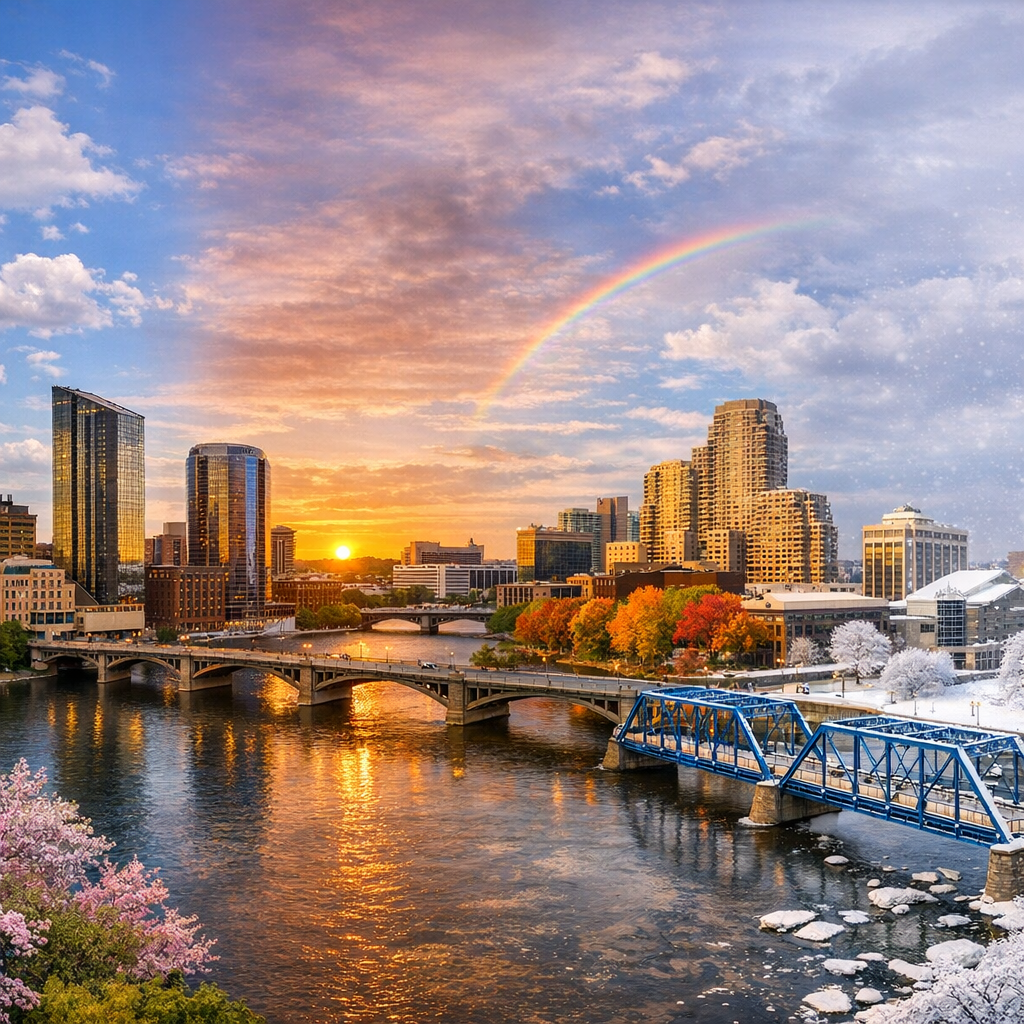
Grand Rapids, Michigan, experiences a diverse range of weather conditions throughout the year, characterized by distinct seasonal changes. Understanding these patterns is essential for residents and visitors alike.
Seasonal Climate Overview
Grand Rapids has a humid continental climate, leading to warm summers and cold, snowy winters. The warm season spans from late May to mid-September, with average high temperatures above 72°F (22°C). July is typically the warmest month, averaging highs around 82°F (28°C) and lows near 63°F (17°C). Conversely, the cold season lasts from December through early March, with average daily highs below 41°F (5°C). January is usually the coldest month, featuring average lows around 18°F (-8°C).
Precipitation and Extreme Weather
Annual precipitation in Grand Rapids has increased by 16% over recent decades. Projections indicate that by mid-century, the city could experience up to 38 days per year with temperatures exceeding 90°F (32°C), a significant rise from the historical average of 7.9 days. Additionally, the frequency of heavy precipitation events is expected to increase, potentially leading to more instances of flooding and other weather-related challenges.
Environmental Initiatives
In response to these climatic changes, Grand Rapids has implemented several environmental initiatives:
Office of Sustainability
Established in 2005, the Office of Sustainability focuses on environmental protection, conservation, and promoting clean energy technologies. The office serves as a community partner and educational resource, aiming to maintain healthy buildings and reduce waste and pollution.
E.H.Zero Initiative
The Equitable, Healthy, Zero Carbon Buildings (E.H.Zero) initiative is a collaborative effort between the City of Grand Rapids, the Michigan Green Building Collaborative, and the Urban Core Collective. This program aims to co-create policies and programs that equitably decarbonize residential and commercial buildings, enhancing community resilience to climate change.
Water Resource Recovery Facility Upgrades
Grand Rapids has secured over $1 million in federal funding to upgrade the UV disinfection system at its Water Resource Recovery Facility. This modernization effort is designed to improve reliability, increase treatment capacity during peak weather events, and enhance energy efficiency, thereby protecting public health and safeguarding local water bodies.
By understanding the city’s climate patterns and supporting these environmental initiatives, residents can contribute to a more sustainable and resilient Grand Rapids.