

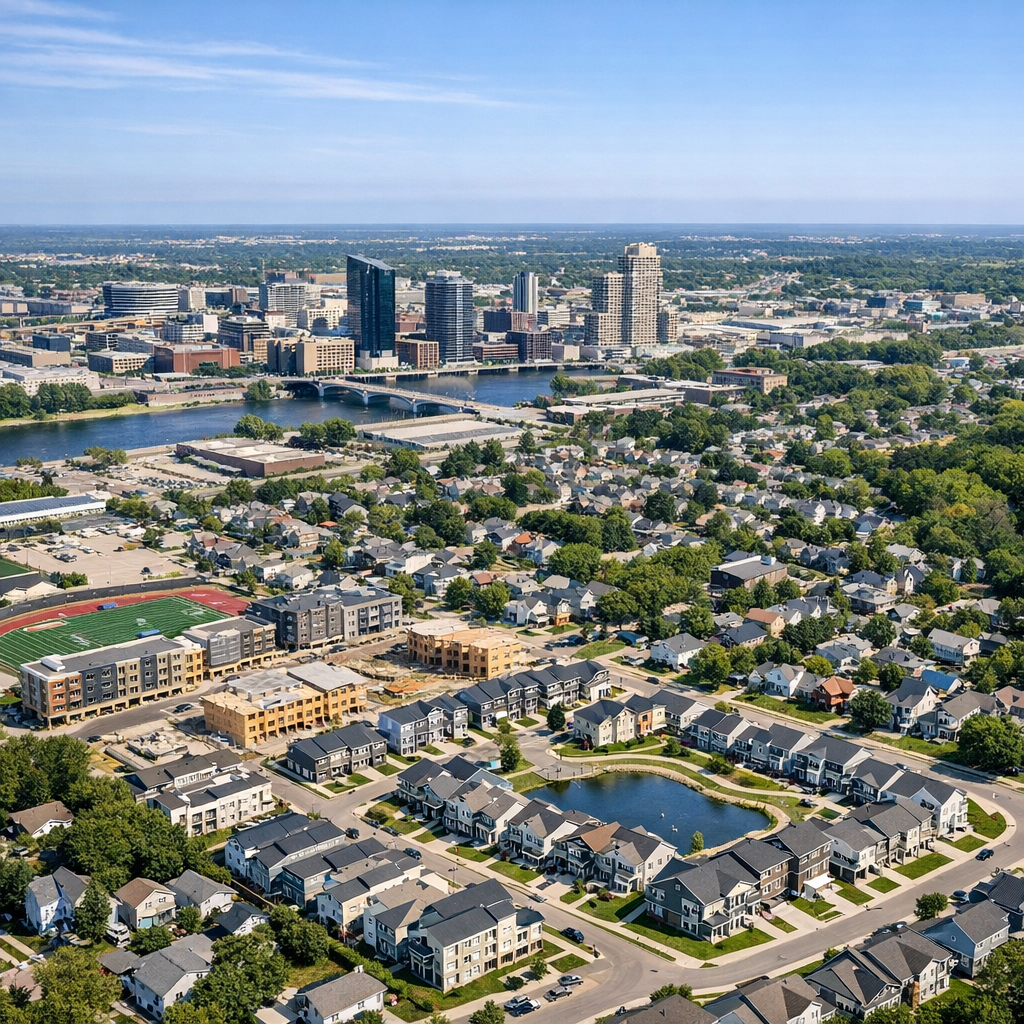
The Grand Rapids housing market continues to exhibit dynamic trends, reflecting both challenges and opportunities for residents and investors alike. As of March 2026, the median sale price of homes in Grand Rapids reached $304,000, marking a 10% increase from the previous year. Homes are selling swiftly, averaging just nine days on the market, with sellers typically receiving multiple offers.
Market Dynamics
Despite the rise in home prices, the market remains competitive. The average home value stands at $303,298, up 2.9% over the past year, with properties going pending in approximately 10 days. This rapid turnover indicates strong demand, underscoring the importance for buyers to be well-prepared and decisive.
New Developments
To address the housing demand, several new developments are underway:
Knapp Hills Townhomes
In the Creston neighborhood, the Knapp Hills Townhomes project is set to break ground in May. This development will feature two- and three-bedroom rental units, with eight units reserved for households earning 100% of the area median income or less. Completion is expected in early 2027.
Verne Barry Place Apartments
Located at 60 Division Ave S, the Verne Barry Place Apartments are undergoing modernization to provide 116 updated residential units. The project includes energy-efficient improvements and an upgraded community room, aiming for completion in the second quarter of 2026.
Steepleview Apartments
At 501 Eastern Avenue, the Steepleview Apartments project is introducing 65 residential units, including affordable housing and live/work spaces. This development is designed to meet LEED Silver standards, contributing to sustainable urban living.
Rental Market Insights
The rental market in Grand Rapids is also experiencing notable trends. The median rent has risen to $1,800 per month, reflecting a 2.86% increase over the past year. With 443 rental properties available, a 19.05% decrease from the previous year, the market is tightening, emphasizing the need for additional rental housing.
Conclusion
Grand Rapids’ housing market is characterized by rapid sales, rising prices, and a competitive environment. Ongoing developments aim to alleviate some of the housing pressures, offering new opportunities for residents. Staying informed about these trends is crucial for those looking to navigate the local real estate landscape effectively.