

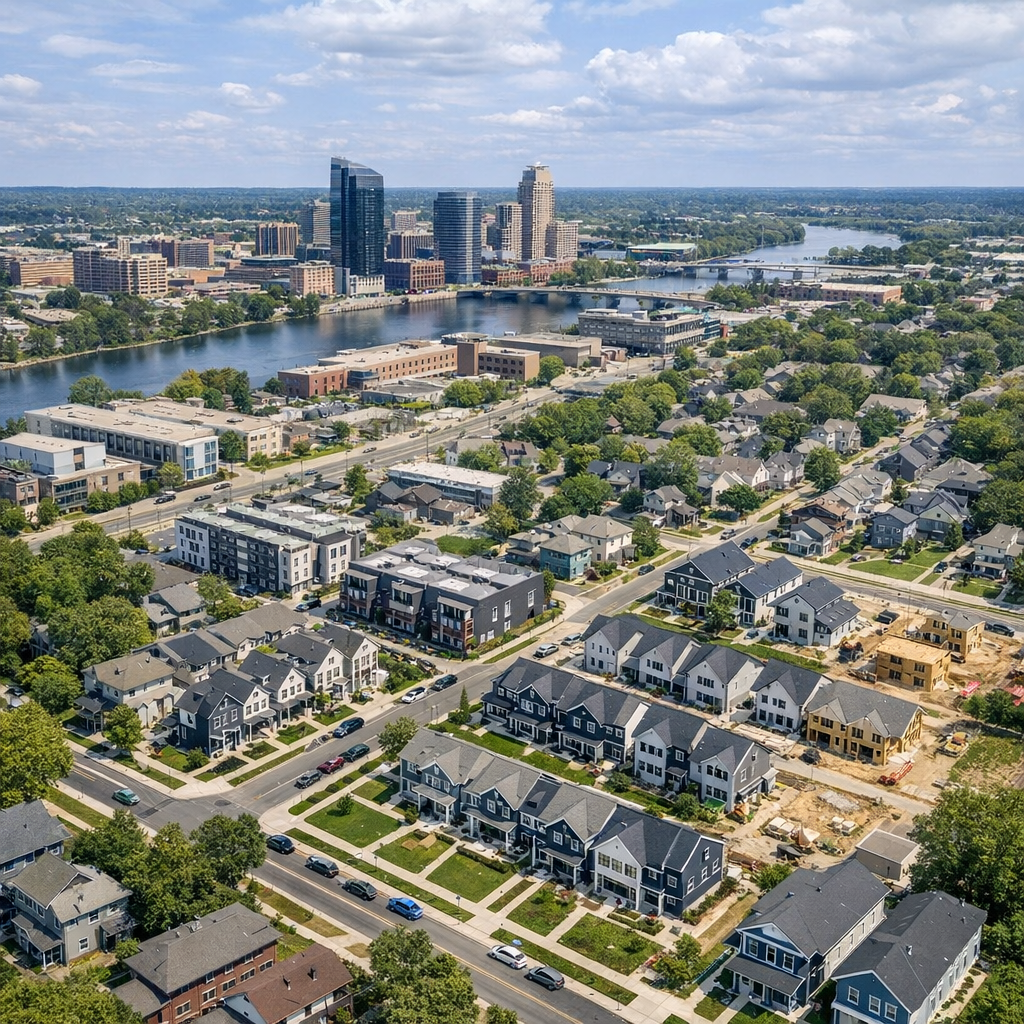
The Grand Rapids housing market continues to exhibit dynamic trends, offering both opportunities and challenges for buyers, sellers, and renters. Understanding these patterns is essential for making informed decisions.
Current Market Trends
As of March 2026, the median listing price for homes in Grand Rapids stands at $322,000, reflecting a slight decrease of 0.89% over the past year. The price per square foot has risen by 5.56% to $209, indicating sustained demand in the area. Active listings have increased marginally by 0.79%, totaling 703 properties. Homes are spending an average of 33 days on the market, a 17.86% increase from the previous year, suggesting a slight cooling in the market’s pace. The rental sector remains robust, with a median rent of $1,800 per month, marking a 2.86% year-over-year increase.
New Housing Developments
To address the growing demand for housing, several new developments are underway in Grand Rapids. Notably, eight new townhomes are under construction at 638 E Fulton St., aimed at providing housing for middle-income families. This project, led by developer Adam Rogalski, seeks to offer accessible rental options within walking distance of downtown amenities.
Additionally, the Barley Flats project on the city’s West Side combines residential living with ground-floor retail space. This development features studio, one-, and two-bedroom apartments with modern finishes and views of downtown Grand Rapids, contributing to the city’s urban revitalization efforts.
Investor Activity
Despite a general cooling of the U.S. housing market, the proportion of homes purchased by institutional investors in Michigan has remained steady. In Metro Detroit, this share slightly increased from 7.3% in the first quarter of 2024 to 7.4% in the same period of 2025. This trend suggests that Grand Rapids continues to attract investor interest, likely due to its affordability, rental income potential, and supportive market conditions.
In summary, the Grand Rapids housing market presents a landscape of steady prices, active development, and sustained investor interest. Staying informed about these trends is crucial for anyone looking to navigate the local real estate scene effectively.