

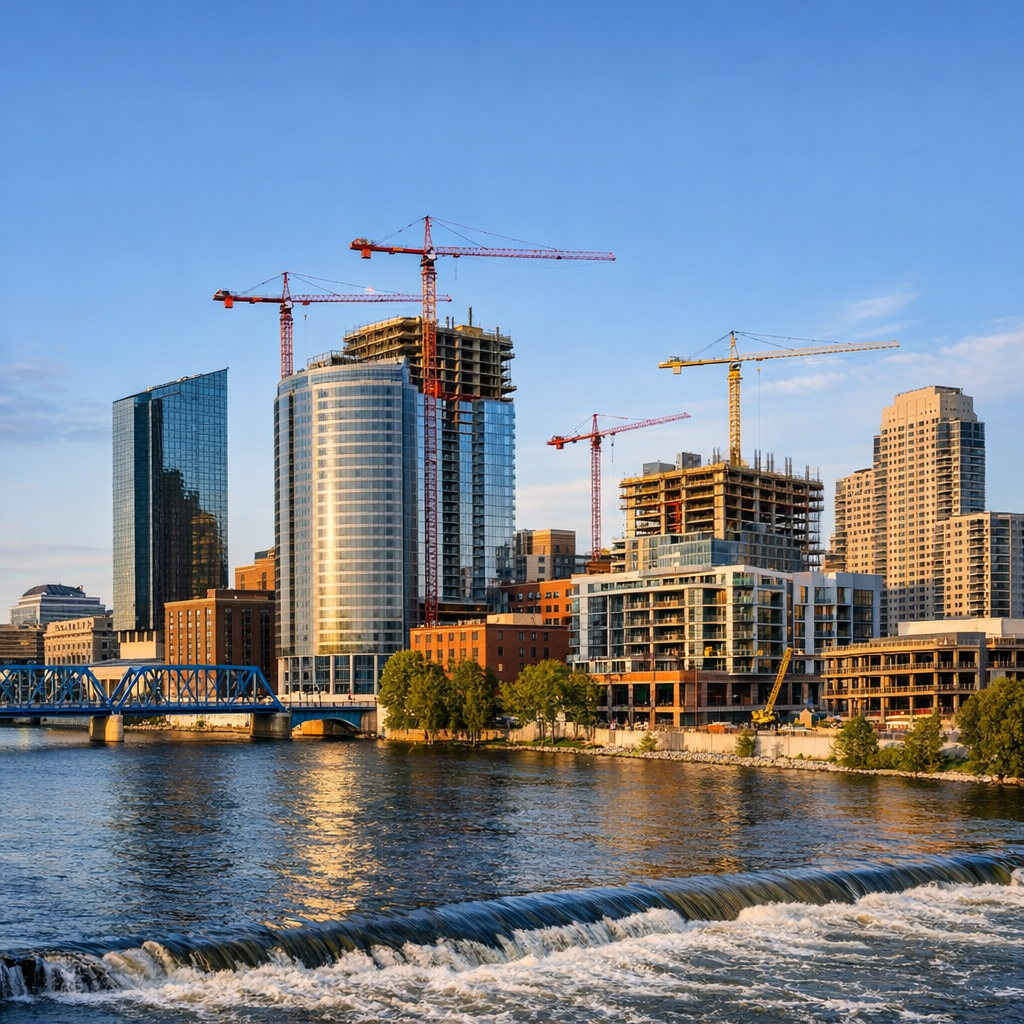
As Grand Rapids continues to evolve, it’s essential to understand how national economic policies shape our local landscape. Federal decisions on economic development incentives, infrastructure funding, and tax policies have direct implications for our community’s growth and prosperity.
Federal Economic Development Incentives
Recent federal initiatives have introduced significant economic development incentives aimed at revitalizing urban areas. For instance, the Transformational Brownfield Plan has been instrumental in supporting large-scale redevelopment projects. In December 2025, the Michigan Strategic Fund Board approved two such projects in Grand Rapids and Kalamazoo, anticipating the creation of over 2,000 jobs and 780 housing units, with a combined investment exceeding $892 million. These projects are set to transform underutilized properties into vibrant community spaces, aligning with the city’s vision for economic growth. Source
Infrastructure Funding and Local Development
Federal infrastructure funding plays a pivotal role in local development. The approval of the Factory Yards project in October 2023 exemplifies this impact. This initiative aims to revitalize the Godfrey Corridor in Grand Rapids, bringing 500 homes and a $146 million investment to the area. Such projects not only enhance the city’s infrastructure but also stimulate economic activity and improve residents’ quality of life. Source
Tax Policies and Business Climate
Federal tax policies significantly influence the local business climate. The elimination of the Strategic Outreach and Attraction Reserve (SOAR) Fund in the fiscal year 2026 budget has raised concerns among local businesses. This fund was a primary tool for attracting major investments, and its removal may impact Grand Rapids’ ability to compete for advanced manufacturing projects. Additionally, reductions in programs like the Going PRO Talent Fund, which supports workforce development, could affect the city’s economic growth trajectory. Source
Local Economic Outlook
Despite these challenges, Grand Rapids’ economic outlook remains cautiously optimistic. A recent analysis by Grand Valley State University indicates that while growth is slowing, the city continues to move forward. Factors such as softer consumer spending and declining manufacturing activity are contributing to this trend. However, ongoing investments and strategic planning at both the federal and local levels aim to sustain and enhance economic development in the region. Source
Understanding the interplay between national policies and local dynamics is crucial for Grand Rapids’ continued growth. By staying informed and engaged, our community can navigate these influences to foster a resilient and thriving local economy.