

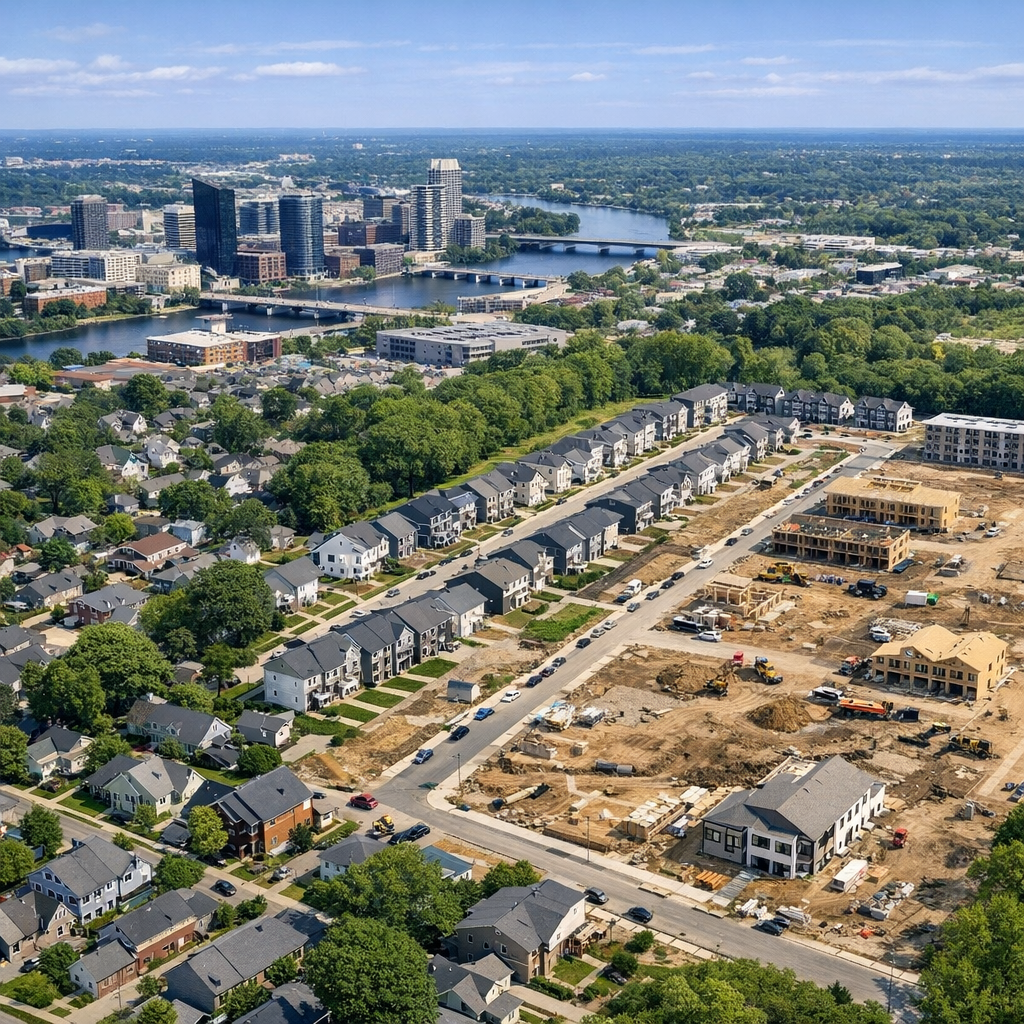
Grand Rapids’ housing market continues to evolve, presenting both opportunities and challenges for residents and investors. Understanding the current landscape is essential for making informed decisions.
Current Market Trends
As of April 2026, the average home value in Grand Rapids stands at $309,801, reflecting a 2.9% increase over the past year. Homes typically go pending in about seven days, indicating a brisk market pace. The median sale price is $287,000, with a median list price of $294,933. Notably, 36.9% of sales have been closing above the list price, underscoring strong demand.
Rental Market Insights
The rental sector mirrors this upward trend. The average rent in Grand Rapids is $1,636, marking a 2.8% year-over-year increase. This figure remains below the national average rent of $1,930, suggesting that Grand Rapids continues to offer relatively affordable rental options compared to other regions.
New Developments and Housing Projects
To address the growing demand, several housing projects are underway:
Boston Square Together Project
Located on the city’s southeast side, this $11 million initiative aims to add 22 to 25 affordable townhomes in the 1100 block of Adams Street Southeast. The project is part of a broader plan to introduce up to 270 housing units, along with office and community spaces.
Knapp Hills Townhomes
In the Creston neighborhood, the Knapp Hills Townhomes project is set to break ground in May. This development will feature 38 units, comprising two- and three-bedroom townhomes. Eight units are designated for households earning 100% of the area median income or less, promoting affordability.
Breton Road SE Development
Construction has commenced at 4325 Breton Road SE, transforming a former grocery store site into 168 residential units. Nearly half of these units will be income-restricted for households earning 95% to 100% of the area median income, contributing to the city’s affordable housing stock.
Conclusion
Grand Rapids’ housing market is characterized by rising home values, increasing rental rates, and proactive development projects aimed at meeting demand. For prospective buyers, renters, and investors, staying informed about these trends is crucial for navigating the market effectively.