

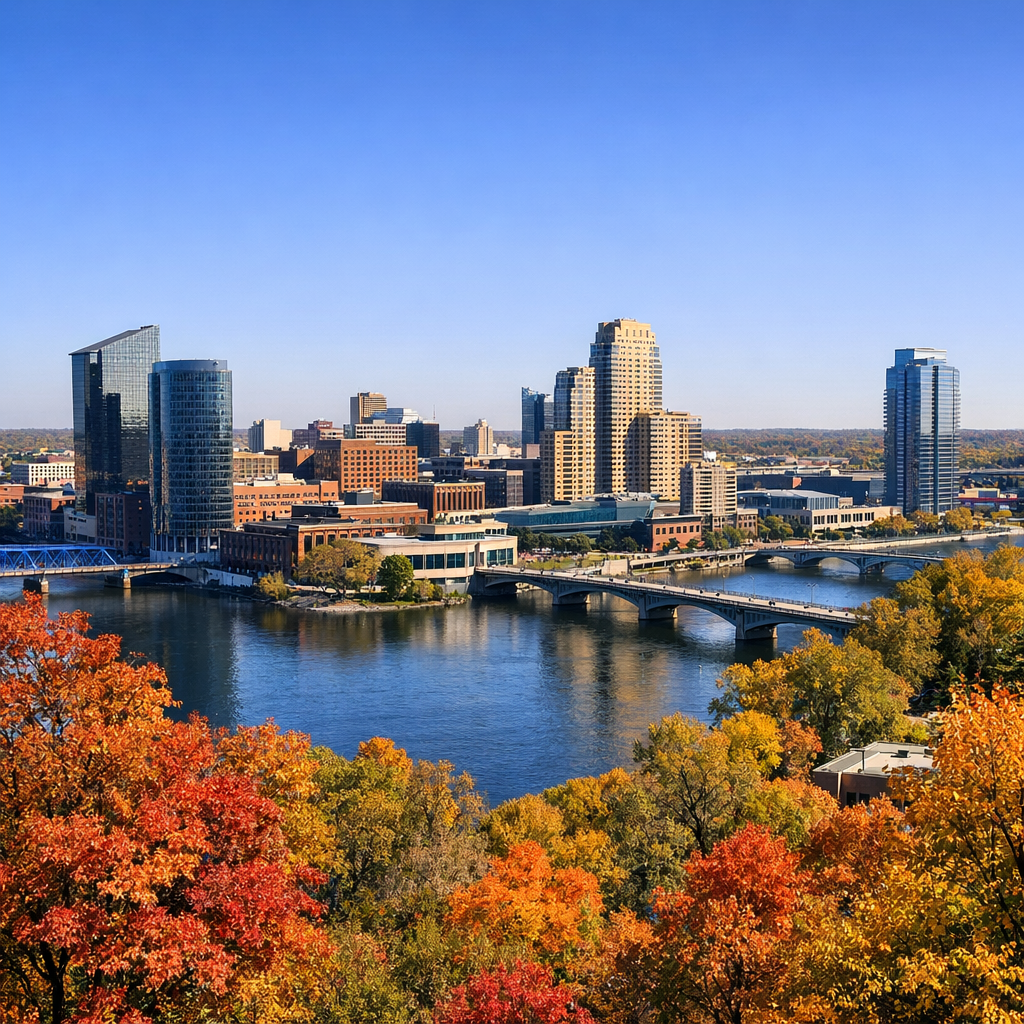
Grand Rapids, Michigan, experiences a diverse range of weather conditions throughout the year, characterized by four distinct seasons: spring, summer, autumn, and winter. Each season brings its own unique climate patterns, offering residents and visitors a variety of experiences.
Spring: A Season of Renewal
Spring in Grand Rapids, spanning March to May, is marked by a gradual warming trend. Average temperatures rise from around 28°F (-2°C) in March to approximately 66°F (19°C) in May. This period also sees an increase in daylight hours, from about 12 hours in March to nearly 14.7 hours by May. Rainfall peaks in May, averaging 1.14 inches (29mm), contributing to the lush greenery that defines the season. Despite the occasional wet conditions, spring serves as a transition to the warmer months, making it an attractive time for outdoor activities.
Summer: Warm and Humid
Summer, from June through August, brings warmth and longer days. Average high temperatures range from 74.5°F (23.6°C) in June to a peak of 79.7°F (26.5°C) in July, before slightly decreasing to 78.6°F (25.9°C) in August. Sunshine is abundant, with July offering up to 10.3 hours of sunlight daily. However, humidity levels are at their highest during these months, around 80%, which can lead to muggy conditions.
Autumn: A Gradual Cool Down
Autumn, covering September to November, witnesses a gradual decrease in temperatures, from 72°F (22.2°C) in September to 45°F (7.2°C) in November. Daylight hours also diminish, from 12.5 hours in September to 9.7 hours in November. Rainfall trends downward during this period, starting from 0.63 inches (16mm) in September to 0.51 inches (13mm) in November, setting the stage for the upcoming winter season.
Winter: Cold and Snowy
Winter in Grand Rapids, from December through February, is characterized by cold temperatures and significant snowfall. Average temperatures drop to 27.7°F (-2.4°C) in December and reach a yearly low of 18.7°F (-7.4°C) in January. Daylight is at its shortest in December, with about 9.1 hours, before slightly increasing to 10.6 hours by February. Snowfall peaks during these months, with January receiving up to 1.57 inches (40mm).
Impact of Climate Change
Recent studies indicate that Grand Rapids is experiencing changes in its climate patterns. Average air temperatures are projected to rise by 3°F to 5°F by the mid-21st century, with summer temperatures potentially increasing by 4°F to 7°F. Historically, the city experienced an average of 7.9 days per year with temperatures over 90°F; projections suggest this could rise to between 20 and 38 days per year by mid-century. Additionally, total annual precipitation has increased by 16%, with projections indicating further increases of up to 3 inches by mid-century and up to 7 inches by the end of the century. These changes may lead to more extreme weather events, including heavier rainfall and increased flooding risks.
Understanding these seasonal patterns and the potential impacts of climate change is crucial for residents and policymakers in Grand Rapids. By staying informed, the community can better prepare for and adapt to the evolving climate conditions.